Backspin: Common Sense — Resurrection (1994)
A dream deferred…but undeterred (85/100)

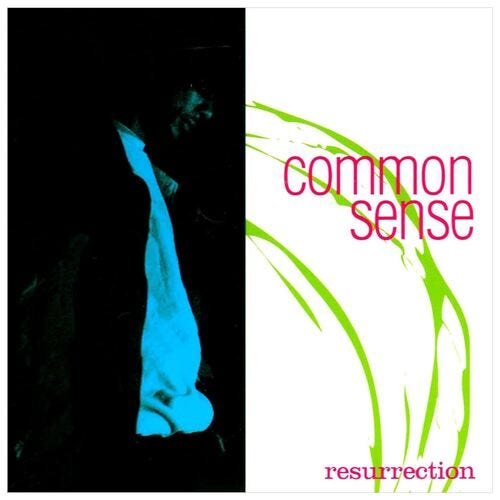
Originally published 3/2/24 on Medium.
In 1992, a heavy burden rested upon Common Sense’s slender shoulders. Among the first featured artists in the The Source magazine’s Unsigned Hype column, the Chicago MC was positioned by the ’90s hip-hop bible as not only the valedictorian of a potentially paradigm shifting “Avante Garde School,” but a wunderkind MC tasked with hoisting America’s third largest metropolis on his back and carrying it onto the national stage.
Despite showing flashes, his debut, Can I Borrow a Dollar? failed to deliver on all fronts. It’s not that Common Sense was scorned. Amid the long shadows cast by seminal debuts from fellow chosen ones on either coast (Snoop’s Doggystyle and Nas’s Illmatic) in the ensuing years, he simply got lost. By fall of ’94, hip-hop’s mid-90s Renaissance was in full swing, and Common Sense was simply one of many interesting, if ultimately unimpactful, footnotes from hip-hop’s free-for-all early ’90s transitionary period.
In a year marked by debuts from a new class of golden children (Nas, Biggie, Method Man, Outkast) and opuses from decorated veterans (Scarface, Gang Starr, Redman, MC Eiht) Chicago’s prodigal son flew under the radar. Amid the storm of now classic missives, Common Sense tiptoed back onto the scene with the quiet precision of the disarmingly delicate piano loop that invites us into Resurrection via its unhurried title track.
In a moment marked by bombast and melodrama, there was something instantly alluring about the easy assuredness with which Common tap danced with No I.D.’s tingling keys and deceptively robust drums. In stark contrast to Can I Borrow a Dollar?’s spastically frantic flows, “Resurrection” is decidedly leisurely, even as Common’s syllabic gymnastics retain their degree of difficulty.
I stagger in the gatherin’
Possessed by a patterin’ that be scatterin’
Over the global
My vocals be travelin’, unravelin’ my abdomen
It’s lines that’s babblin’ grammatics that are masculine
Like a jazz soloist, Common’s performance feels born of a symbiotic relationship with the track’s other elements. As first pass, the entendre heavy rhymes feel like a free association exercise in wordplay. Yet, there’s a palpable sense of direction. With the music as his muse, it feels like Common is reconnecting with his essence as an MC and a person — from his affection for BET’s Madelyne Woods to his ongoing struggles with alcohol. As a table setter, “Resurrection” offers a subtle but clear indicator that any rebirth that’s going to occur over the course of the next 50 minutes will begin with a retrenchment; Common’s recommitment to the essence of himself and his art form.
If the title track marks a push of the reset button on Common’s hip-hop career, “I Used To Love H.E.R.” is his plea for a reset of hip-hop itself. In turns nostalgic, mournful, and strident, the album’s lead single plays like couples therapy through extended metaphor. Positioning hip-hop as a first love gone astray, Common meticulously sorts out their shared history en route to reckoning with their current crossroads.
Now, periodically, I would see
Ol’ girl at the clubs, and at the house parties
She didn’t have a body, but she started gettin’ thick quick
Did a couple of videos, and became Afrocentric
Out goes the weave, in goes the braids, beads, medallions
She was on that tip about stoppin’ the violence
About my people she was teachin’ me, by not preachin’ to me
But speakin’ to me, in a method that was leisurely
So easily I approached
She dug my rap, that’s how we got close
But then she broke to the West Coast, and that was cool
’Cause around the same time, I went away to school
And I’m a man of expandin’, so why should I stand in her way?
She’d probably get her money in L.A.
And she did, stud, she got big pub, but what was foul
She said that the pro-black was goin’ out of style
Released as G-Funk — with its seductive pairing of unrepentant hedonism and lush synth arrangements — was reaching its commercial apex, “I Used To Love H.E.R.” gave voice to the unsettling feeling starting to percolate among early generations of hip-hoppers. Just as it was enjoying unprecedented embrace and long withheld monetary spoils, hip-hop seemed to be growing distant from the very people who shaped it.
That 1994 is now often cited as hip-hop’s greatest year lends the track a touch of unintentional irony. Today’s reverence for ’94 also speaks to how thoroughly the hallmarks of commodification were being woven into the culture, making Common’s now signature song all the more bittersweet.
As strong as the opening song suite is, it’s the 4th track “Book of Life”, on which Resurrection’s mission truly comes into focus. Over wandering winds and arguably the album’s heaviest drums, Common delivers one of the most nakedly personal reflections hip-hop had seen. Completely shorn of bravado, aggression, and theatricality, “Book of Life” is a living, breathing portrait of a young man negotiating the treacherous roads of late 20th Century early adulthood.
Common’s middle class upbringing sheltered him from the punishing perils of poverty that drove most hip-hop narratives of the time. His stakes aren’t life or death. Yet, the relative ease of his journey makes his failure to navigate it all the more frustrating, his frank self-reflection all the more unforgiving.
I want a job but I ain’t lookin’ (how come?)
I ain’t tryin’ to degrade myself, bein’ nobody’s Calvin
I’m a couch bum
What makes it bad, I had incentive
But that disintegrated to a state that stagnated
I procrastinated
I can’t recall a day without bein’ intoxicated
Or blowed
I’m dealin’ with a full deck, and any day I can fold
What makes it bad, I wasn’t dealt that bad a hand
Having looked unflinchingly inward, Common uses the next two tracks to cast an equally piercing eye on the world he inhabits. While No I.D. steps from behind the boards to open “In My Own World (Check the Method)” with a leisurely flex of clever braggadocio, Common follows with a moody meditation on his personal evolution and changing place in a familiar world. His tone vacillates from boastful to strident to restless as he struggles to balance his seemingly opposing realities: rising fame and escalating pressure, militance and lustiness, professional growth and personal awakening.
The tone shifts to warm nostalgia on “Nuthin’ To Do”, a journey through the high jinks of the exhilaratingly aimless nights on Chicago’s South Side that comprised so much of his youth’s tapestry. The track’s unhurried joie de vivre is disarmingly inviting, even as some of Common’s early ’90s pastimes haven’t aged well. (A casually tossed off reference to gay bashing lands particularly uncomfortably on the modern ear.) Yet, the past tense phrasing of the song’s verses stands in jarring contrast to the present tense chorus. It’s as if, as fondly as he remembers his teenaged exploits, he’s well aware that they represent a closing chapter, past which he has already read. (“But the s*** ain’t as fun now, and the city’s all run down.”) What he’ll grow into is the question with which the album seems to wrestle throughout.
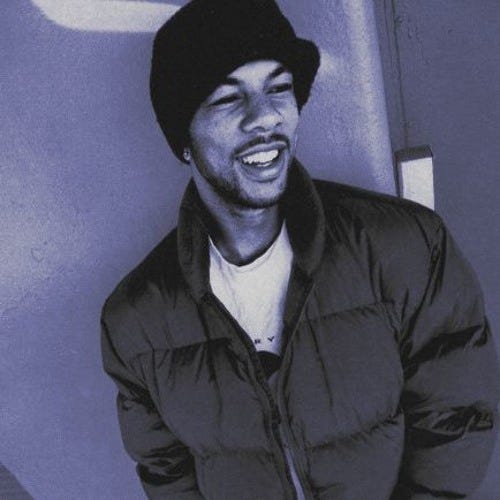
“Communism” opens the B-Side with a clever mission statement in which Common strives to define an ethos using the first syllable of his stage name. It’s a playful diversion punctuated by with moments of profundity reminiscent of Tribe’s “What?”
To my comp I’m a ton I get amped like Watts in a riot
My compact disc is a commodity, so buy it
Instead of competing with Pete
Com compromised, Com made a promise
Not to commercialize, but compound the soul
With other elements, compelling sense into Communism
In many ways, “Thisisme” feels like the culmination of Resurrection’s journey. Sonically, No I.D. stays true to the album’s airy jazz aesthetic. Yet, the crisp drums and spare arrangement barrel forward with a newfound certitude to match the scratched chorus cribbed from Boogie Down Productions’ “Build and Destroy”: “I love the way I am, and can’t nobody out here change me.”
Lyrically, Common reaches a state of acceptance of himself and his current place, existential uncertainty and all. His delivery lags behind the beat, his off-kilter rhyme patterns refusing to settle into a pocket. The unorthodox delivery holds attention on his words despite the temptation to float away on the serene saxophone sample from Alton McClain and Destiny’s “The Power of Love”. Explicitly connecting to the original’s theme, Common concludes his stream of consciousness trek by finding harmony in simplicity, proclaiming:
I love my music, I love my mama
I love myself, I love you, and you love me
“Thisisme” feels so much like a resolution that the album struggles to retain its taut intentionality for the remainder of its runtime. “13th Chapter (Rich Man vs. Poor Man)” a roisterous tag team with fellow South Sider Y-Not, makes for a spirited coda. Beginning as a devil-may-care lampooning of the two MCs’ struggles to crack the cheat code to late stage capitalism (peppered with a heavy dose of ingenious word play), it slyly builds into an allegorical callout of class hierarchy and a rallying cry for economic empowerment. It presents a clear maturation from the generational apathy chronicled through so much of the album.
However, the braggadocious boom-bap of “Orange Pineapple” feels reductive on the back half of an album so otherwise strategic in its progression. Likewise, “Maintaining,” and “Sum S*** I Wrote” (which features the album’s hardest beat, courtesy of Y-Not) would have made for inspired B-Sides to 12-inch singles. As the album’s thirteenth and fourteenth tracks, they simply feel like walking in circles at the end of a sojourn that’s already reached its natural conclusion. Had “Pop’s Rap,” the closing monologue delivered by Common’s father, Lonnie Lynn Sr., come directly after “13th Chapter,” its messages of upliftment and subtext of “this too shall pass” would likely have felt more far more resonant, their connections to the album’s themes cutting through clearly.
The only real criticism consistently leveled at Illmatic, to which Resurrection is periodically compared, is that at 10 tracks, it’s too short. The latter’s expansive scope actually validates the brevity of the former. An Illmatic-length Resurrection could well have stood among the best albums of a truly stacked year.
Though Resurrection sits firmly on ‘94’s second tier (certainly no small feat), Common succeeded in breathing life back into his career and taking the first steps in carving out a new lane in hip-hop. The Native Tongue collective, with whom Common would be affiliated for the remainder of the ’90s, are often credited with creating the “regular guy” mold from which the struggle rap of the earlier 2000s grew. In actuality, they were eclectics and bohemians. It may not have been the identity previously associated with the rap star prototype, but it was an identity. Common Sense truly spoke for the faceless 75% of every high school. The kids who play a little ball, but aren’t jocks. Get descent grades, but aren’t academics. Get a few girls, but aren’t players.
It’s fitting that following Resurrection’s success, Common was forced to drop “Sense” from his name due to a lawsuit by an Orange Country reggae band that held the copyright. The abbreviated moniker perfectly captured his position as hip-hop’s thinking everyman, giving voice to the gradual, and at times painstaking, process of self-discovery that defines early adulthood.
Resurrection represents the beginning of an odyssey of self-reflection marked by transcendent peaks (2000’s Like Water for Chocolate) and polarizing detours (2002’s Electric Circus) before culminating in Common’s triumphant actualization on 2005’s Be. A fully actualized Common would ultimately transition from searcher to sherpa, using his music and accumulated wisdom to guide others along their paths of discovery. He’s still engaging when inspired. Perhaps even necessary. But much less interesting.
Art, like life, truly is about the journey. Resurrection embodies the difficulty, the power, and ultimately the beauty in simply taking the first step.
By the Numbers
Production — 8.5
Lyrics (how the words are put together): 9.5
Delivery & Flow: 9
Content (Substance): 10
Cohesiveness: 8.5
Consistency: 8
Originality: 8.5
Listenability: 9
Impact/Influence: 7
Longevity: 7
Total — 85
Backspin is a look back at the albums that shaped and defined hip-hop. It explores what made them resonate, the impact they had on the culture, and where they fit in today’s ever-expanding hip-hop canon.
Over the global …. My vocals be traveling
The album met me when I was hitting my entry in “Teen age” and the most captivating aspects of common sense music was the beats….. I immediately love “I used to love her and the album title track” instantly
Having been introduced to HipHop by my elder brother (RIP), in Africa we got the “Tapes or Records” a lil late and a 1994 album was making airplay in 96 like it had just dropped. But that’s the beauty of timeless record such as Resurrection.
A HipHop collectors album (my view)
Incredible breakdown of Resurrection's place in '94. The point about Common creating the "regular guy" lane before struggle rap codifed it is really underappreciated. "I Used To Love H.E.R." hitting at the exact moment G-funk peaked is such perfect timing—like hip-hop needed that vocie even if it didn't fully realize it yet. The album length critique is spot on too, tracks 13-14 definitely dilute what could've been a flawless 10-track run.